
Learn About Us

My photo
Winter Haven, Lakeland, Davenport, Bartow, FL, United States
We offer the latest technology in diagnostic studies, our office is the only one in Polk County to offer PSSD testing for peripheral nerve problems.
Showing posts with label barefoot running. Show all posts

Monday, August 2, 2010

Staying Hydrated While Running

As the dog days of summer roll by, the heat index stays high while the training period continues. Whether you’re training for that fall marathon, or simply enjoy running outside, it is important to remain hydrated.

Depending on your type of workout, there are a number of options for hydration. Water is the obvious choice, but sports drinks are numerous and heavily marketed to the athlete and casual exerciser alike.

Most sports drinks have added carbohydrates and electrolytes to help with rehydration. The carbohydrates allow for added energy for your body as you are working out. The electrolytes sodium and potassium are added to help maintain fluid retention in the body, as well as key functions of muscles. For runners that are running for more than 30 minutes at a time, sports drinks are a good option to remain hydrated.

For longer distances, especially for those training for a marathon that may be running for several hours straight, there are more advanced sports drinks available. These drinks contain more complex carbohydrates that won’t breakdown as quickly, as well as protein for more sustained energy. They too have plenty of electrolytes to keep the athlete hydrated.

Enhanced and flavored waters offer vitamins and minerals in a sweetened package, but are usually not formulated for athletic hydration. They are, however, a good alternative to water for those with an aversion to the natural stuff. For workouts that last less than thirty minutes, water or an enhanced water are good choices.

A common mistake made by runners in the heat is to over-hydrate. Drinking too much water can make you sluggish and lethargic, and seriously slow down your pace. A good way to avoid this is to drink two cups of liquids two hours before exercising. This ensures that you are hydrated to begin with. Once the workout starts, it’s important to take sips of water/sports drink every fifteen minutes or so.


Central Florida Foot & Ankle Center, LLC
101 6th Street N.W.
Winter Haven, FL 33881
Phone: 863-299-4551

Monday, March 16, 2009

Barefoot Running


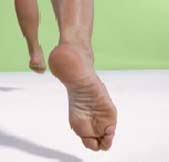
The barefoot lifestyle and barefoot running is a trend gaining popularity in the running community.  Opinions on barefoot running vary greatly, from “Absolutely Not” to “Absolutely No Other Way”. 


            The barefoot community claims that running barefoot improves the runner’s form, and eliminates problems like knee and hip pain.  This is due to a change in form.  When wearing running shoes, which typically have a thick padded cushion in the heel, striking the ground with the heel first sends shock all the way up the leg.  This force is largely absorbed by the knee, as well as the hip and back, which can be transferred to chronic pain.  Barefoot running eliminates the option of heel striking, forcing the barefooter to land on the balls of the feet, with the feet lined up directly underneath the hips.  This allows the force to be displaced more evenly, avoiding common running injuries.

            Many claim that the barefoot lifestyle is the only way to go.  Advocates of a barefoot lifestyle claim that it is the only true way to feel the ground, and that keeping your foot in a shoe all day is bad for the mind and the spirit.  Barefoot running expands into barefoot walking, even barefoot driving!

            But is the barefoot lifestyle a wise decision?  The opinion on the other side of the spectrum is that barefoot running and walking can lead to serious health problems.  Imagine walking around barefoot all day with an “improper” form, striking with your heel.  This would lead to some serious heel pain.  Also, a barefoot lifestyle offers no protection against the elements, and no protection against debris that may be on the ground.  Puncture wounds on the foot can lead to serious infections. 

            Still, even with the obvious thought that a barefoot runner’s feet would get chewed up by the elements and terrain, barefoot running has a significant following.  In fact, many bare footers prefer a rough terrain like asphalt to a soft terrain like grass or sand!  There has been much reporting on the barefoot lifestyle, including this article found in New York Magazine, which discusses the idea of shoes wrecking our feet by wearing shoes.  There are websites devoted to a barefoot lifestyle, like the Society for Barefoot Living and RunningBarefoot.org.

            While many may shudder at the thought of walking to the store with no shoes on, or running on a city sidewalk barefoot, there are those who would have it no other way.  Which side of the fence are you on? 

Central Florida Foot & Ankle Center, LLC
101 6th
 Street N.W.
Winter Haven, FL 33881
Phone: 863-299-4551

http://www.flfootandankle.com